The Next Day
Matthew 27
The next day, that is, after the day of Preparation, the chief priests and the Pharisees gathered before Pilate and said, “Sir, we remember what that impostor said while he was still alive, ‘After three days I will rise again.’ Therefore command the tomb to be made secure until the third day; otherwise, his disciples may go and steal him away and tell the people, ‘He has been raised from the dead,’ and the last deception would be worse than the first.” Pilate said to them, “You have a guard of soldiers; go, make it as secure as you can.”So they went with the guard and made the tomb secure by sealing the stone. (Matthew 27)
The celebrating of the festival went far into the night. All of Jerusalem seemed to join the party, in remembrance of the most significant event in our Jewish faith, the Passover. Of all our festivals, this celebration, the Passover, was by far the greatest.
However, not everyone was celebrating. No, some of us, followers of Jesus from Galilee, were, apart from the joyous party, actually hiding, in grief. In fact, it might be even more accurate to say that we were in shock. I’m sure that you know why, but you may not fully understand our feelings on the day after the crucifixion of Jesus, what the passage above calls “the next day.” I will get back to that in a moment.
Who am I? A follower of Jesus, to be sure. No, I am not one of his inner circle, but I can say that I came to Jerusalem with his closest followers because I believe (or should I say I believed?) that he is (or was?) the Messiah, even the son of the Living God.
Out on the streets of Jerusalem, you could hear the talk. People would cluster in small groups, discussing, which was our way of sharing the news of the day.
From some: “I’m very happy that our leaders took action against that imposter, Jesus of Nazareth. He was leading so many astray, and making trouble for us with the Romans. He’ll be forgotten, I predict, within a month!”
From others: “I didn’t know much about Jesus, but I did listen to him as he taught in the temple. His words really struck me as genuine and powerful. But I don’t understand why he didn’t defend himself, because surely, he was innocent of any crime.”
And from still others: “Jesus had some good things to say, but really, who was he? I mean, he had no credentials, he was from some backwater village in Galilee, and our leaders certainly thought he was trouble. So, why should I be concerned about his death?”
And there were even some had no idea who Jesus was: “Who was this man Jesus? Why hadn’t I heard about him before now? Why was he crucified? What was his crime? Where was he from? Who were his people?”
If you take one thing away from these comments of ordinary citizens, please note that all of them are in the past tense. To them, without a doubt, Jesus was dead and gone. And why would they think otherwise? His execution was public and brutal. No one has ever survived crucifixion.
Meanwhile, as you can read above, the chief priests and Pharisees were leaving nothing to chance about the death of Jesus. All I can say is that it seems that their fear of the crucified Jesus was just as strong in death as it was while he was still alive.
And what about us, the followers of Jesus? No, we were not out on the streets, engaging in conversation about the events of the day. You see, we dared not go out at all, not if we could help it. And when we gathered, it was all in whispers. Comforting Mary was our main priority.
Always before, our moments of fear and anxiety would be calmed by Jesus. Surely you remember how, in the midst of a terrible storm on the Sea of Galilee, Jesus came to us, removing our fear, just as he calmed the sea. But now, we were leaderless and left to draw from our own feeble faith. Without Jesus, we were alone and we felt abandoned. Can you relate?
“Where is Peter? Where are the others who were closest to Jesus?” Our hope was to find him and the others and come together in our mourning. Perhaps we might even think through our options for the future. But Peter was nowhere to be found. We, of course, didn’t know the reason: he was hiding in shame for his denials of Jesus.
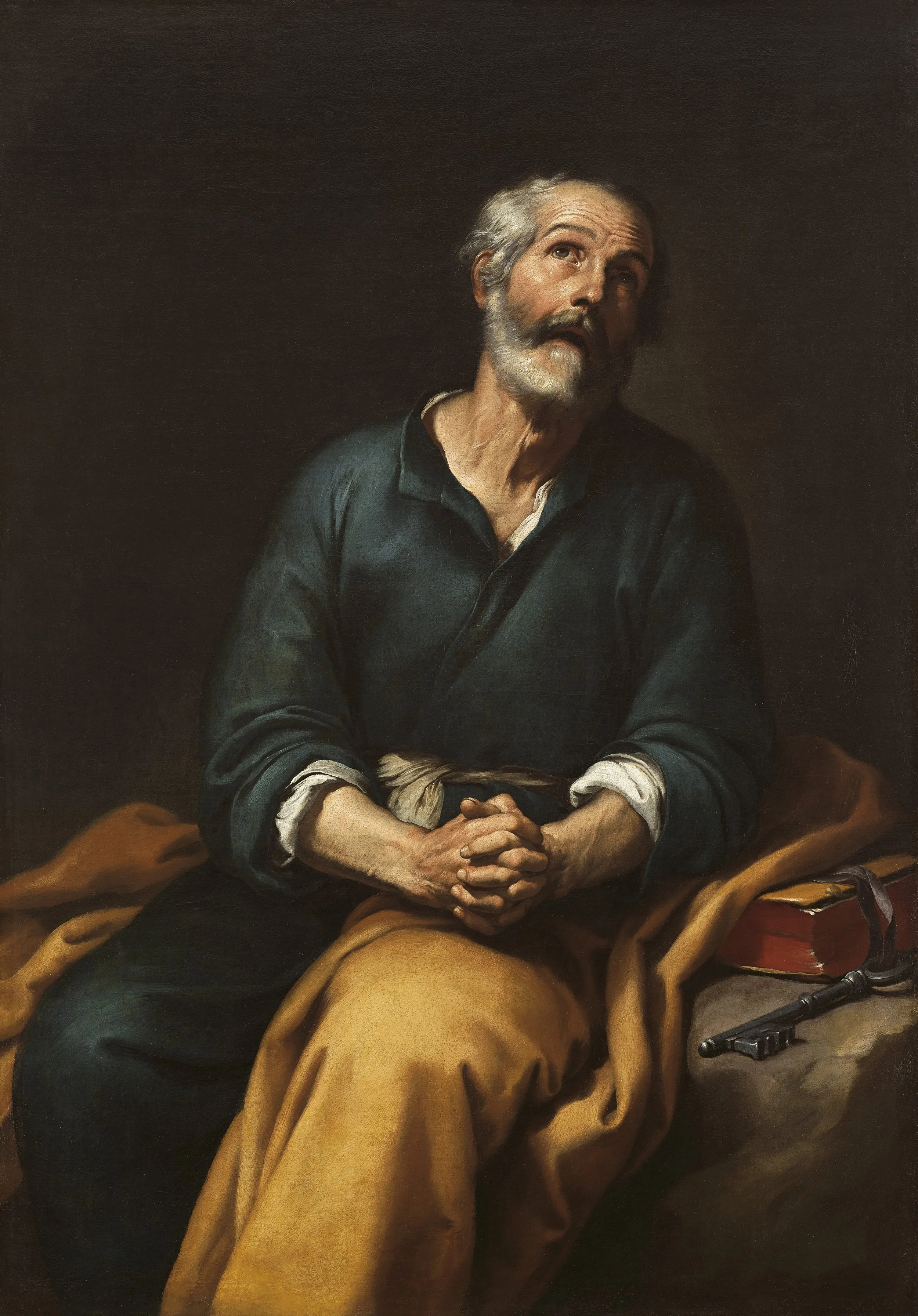
Saint Peter in Tears
Bartolomé Esteban Murillo (1617–1682)
And then later, we learned that, after his despicable betrayal of Jesus, Judas had killed himself. With such a dizzying chain of events, you can hopefully see why we were so paralyzed in fear.
We began to attempt to recall all that Jesus had told us about his fate, and I have to say that in our current emotional state, we were not thinking clearly. Among other things, one in our party did remember, that just the night before, Jesus had used these words:
You will all fall away because of me this night, for it is written, ‘I will strike the shepherd, and the sheep of the flock will be scattered.’ (Matthew 26)
And slowly, some of his other words came back to us:
A little while, and you will no longer see me, and again a little while, and you will see me. (John 16)
The Son of Man must undergo great suffering and be rejected by the elders, chief priests, and scribes and be killed and on the third day be raised. (Luke 9)
It’s not that we didn’t believe these words. We did, but only at a surface level. Did we believe them in the core of our hearts? Speaking for myself, I have to say no, those words conveyed only a vague hope, and nothing more.
And now, in the immediacy of our fear and confusion and horror, we even began to question who Jesus was. I mean, could the Son of the Living God be killed? As a common criminal? I mean, he was dead. We saw him die. A few of our party even witnessed his burial. It all began to sink in and to conclude otherwise was to deny what our eyes told us. So, please don’t condemn us because we couldn’t help but even question if Jesus was, as we believed, the long-expected Messiah and God’s only Son.
So many questions, and so many doubts. I hope you can understand. Yes, I hope you can see, looking back from centuries from now, how our feelings of fear and grief took over and clouded our thinking and also our actions.
I’m certain that, with more time, our faith in the words of Jesus would have been restored. But this was still all so fresh. And so, just as we were slow to understand when Jesus predicted his death, we were equally slow when it all came true. Could this have really been God’s plan all along? It went so completely against any human notion of victory; more, really, of humiliating defeat.
And so, just as we had panicked in the storm on the Sea of Galilee, so were we now. And of course, as you have always known, and as we were about to learn, on the third day, Jesus again came to our rescue.
When it was evening on that day, the first day of the week, and the doors were locked where the disciples were, for fear of the Jews, Jesus came and stood among them and said, “Peace be with you.” After he said this, he showed them his hands and his side. Then the disciples rejoiced when they saw the Lord. Jesus said to them again, “Peace be with you. As the Father has sent me, so I send you.”(John 20)
You know the rest of the story. You, of course, have the advantage of history. You can read about it in your time, while we, on the other hand, lived through this amazing chain of events. I’m sure that you cannot imagine our doubts and panic. Please don’t miss that and, if you can, put yourself in our place, living through “the next day” as we did.
And please, also, don’t miss this: as you read the words of Jesus when he greeted us on the evening of the first day of the week, the day of resurrection, remember that he could have called us out for our lack of faith and for even doubting who he was. We certainly deserved any words of criticism that Jesus might have chosen.
But that was not the way of Jesus. Actually, as Jesus said many times, he did not come to criticize and judge. And so, rather than condemn us as we deserved, Jesus expressed words of peace. Yes, peace, and not just any peace, but the peace of Christ, the only true peace in this world.
And that same peace is what I wish for you. Please read this letter as an appeal to you to remember us, not so much for our doubts and weaknesses, which were shameful, but for the undeserved expressions of peace that we received from Jesus, and which he also extends to you.